二叉树
基本概念
定义
二叉树是一种特殊的树形结构,每个结点至多只有两颗子树(所有结点度不大于2)
二叉树的子树有左右之分,次序不能颠倒(因此为有序树)
由于二叉树的孩子也是二叉树,故二叉树也是递归定义的结构
二叉树的特殊分类
满二叉树
概念
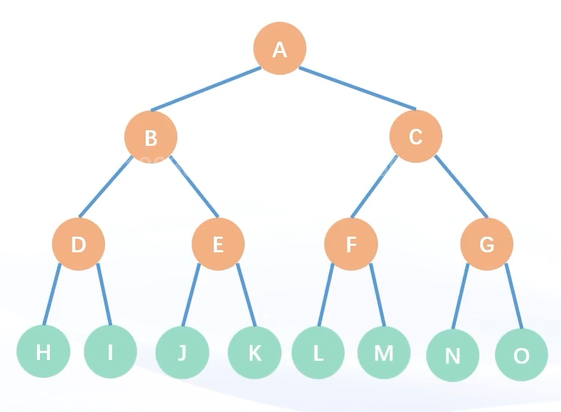
在一颗二叉树中,所有非叶子结点都存在左右孩子,所有叶子都在同一层
性质
如果将满二叉树,按照层序遍历的过程编号,那么
结点 \(i\) 的左孩子编号:为 \(2i\)
结点 \(i\) 的右孩子编号:为 \(2i + 1\)
结点 \(i\) 的双亲编号:\(i/2\)
注:若以 0 开始编号,则
结点 \(i\) 的左孩子编号:为 \(2(i + 1) - 1=2i+1\)
结点 \(i\) 的右孩子编号:为 \(2(i + 1) + 1 - 1 = 2i + 2\)
结点 \(i\) 的双亲编号:\((i + 1)/2-1\)
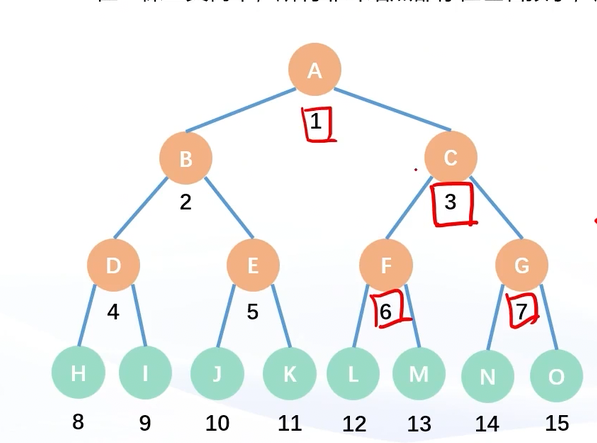
利用这个性质,可以用来帮我们存储满二叉树
完全二叉树
概念
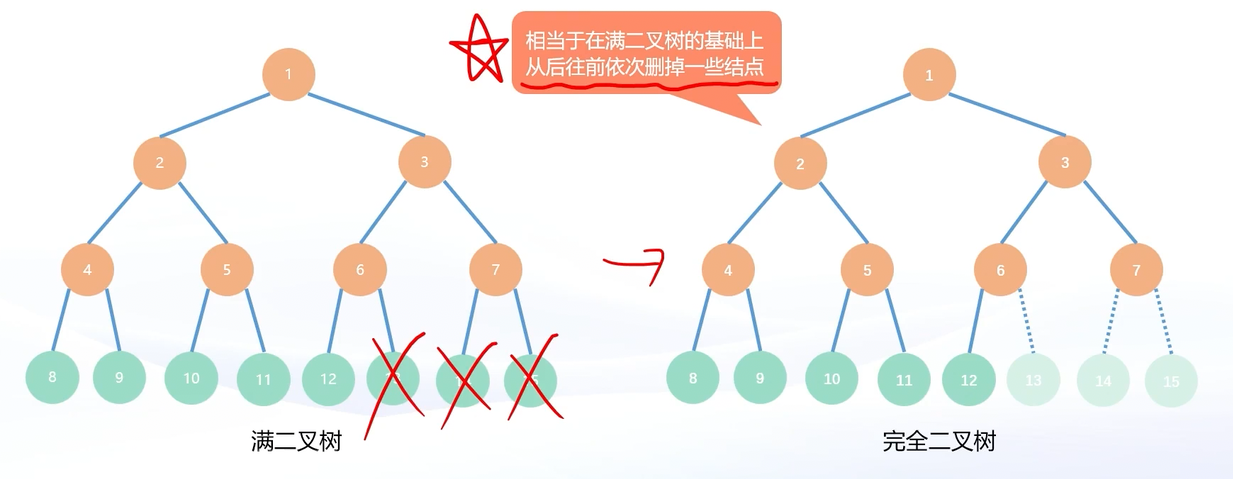
就是在满叉树的基础之上,从右往前依次删掉一些结点
顺序存储实现
概念
在《树》的章节中,学过了树的vector数组实现、链式前向星实现。这里同样可以以这些存储方法来实现二叉树
由于二叉树的结构特性,除了以vector数组、链式前向星这两个实现方法(标记左孩子、右孩子),还能用符合二叉树特性的存储方式:顺序存储、链式存储
顺序存储
对于满二叉树,根据满二叉树的性质,计算父子结点的编号
若不是满二叉树、完全二叉树,要把缺失的部分空着,然后再去编号(缺点是空间利用率不高)
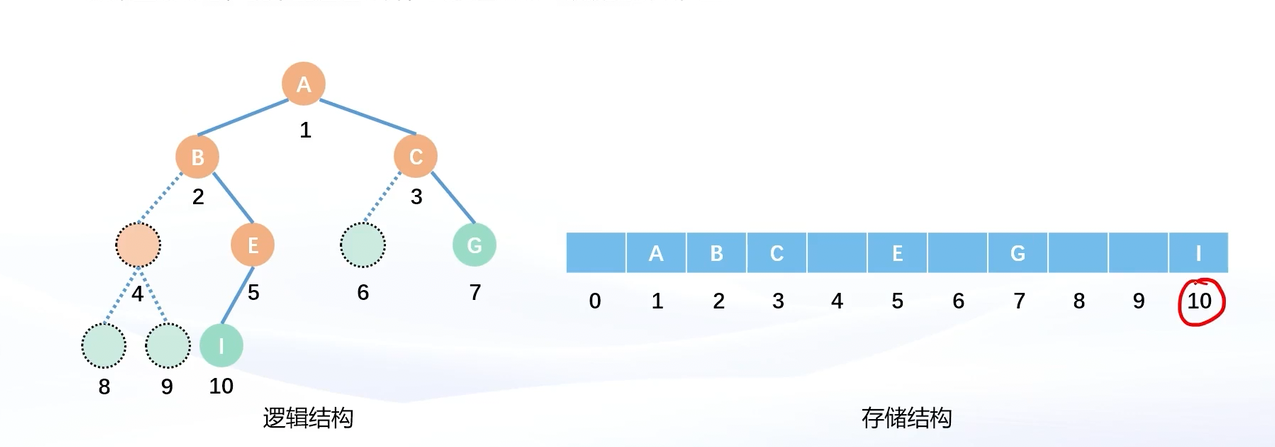
这种存储方式相对简单清晰,在后续 堆、线段树 的课程中,我们再继续讨论
链式存储实现
链式存储
这里依旧只讲解静态实现,也就是用数组模拟(动态实现这里不做要求,在企业中才需要动态存储)
竞赛中给定的树结构一般都是有编号的,二叉树也是如此。因此,我们可以创建两个数组l[N]、r[N],分别存储i号结点的左右孩子的编号,这样就可以通过数组下标实现链式访问
代码实现
#include <iostream>

using namespace std;

const int N = 1e5 + 10;
int child_left[N], child_right[N];

void addChild(const int& root, const int& left_child, const int& right_child) {
    child_left[root] = left_child;
    child_right[root] = right_child;
}

int main() {
    int n = 0;
    cin >> n;
    for (int i = 1; i <= n; ++i) {
        int l = 0, f = 0;
        cin >> l >> f;
        addChild(i, l, f);
    }

    return 0;
}
DFS
概念
与树不同的是,二叉树的DFS遍历可以分为:中序、前序、后序
- 前序:根、左、右
- 中序:左、根、右
- 后序:左、右、根
代码实现
#include <iostream>

using namespace std;

const int N = 1e5 + 10;
int child_left[N], child_right[N];

void addChild(const int& root, const int& left_child, const int& right_child) {
    child_left[root] = left_child;
    child_right[root] = right_child;
}

// 前序遍历
void dfs_1(const int& root) {
    cout << root << " ";
    if (child_left[root]) {
        dfs_1(child_left[root]);
    }
    if (child_right[root]) {
        dfs_1(child_right[root]);
    }
}

// 中序遍历
void dfs_2(const int& root) {
    if (child_left[root]) {
        dfs_2(child_left[root]);
    }
    cout << root << " ";
    if (child_right[root]) {
        dfs_2(child_right[root]);
    }
}

// 后序遍历
void dfs_3(const int& root) {
    if (child_left[root]) {
        dfs_3(child_left[root]);
    }
    if (child_right[root]) {
        dfs_3(child_right[root]);
    }
    cout << root << " ";
}

int main() {
    int n = 0;
    cin >> n;
    for (int i = 1; i <= n; ++i) {
        int l = 0, f = 0;
        cin >> l >> f;
        addChild(i, l, f);
    }

    dfs_1(1); // 先序遍历
    cout << endl;
    dfs_2(1); // 中序遍历
    cout << endl;
    dfs_3(1); // 后序遍历
    cout << endl;

    return 0;
}
测试用例:
6
2 3
4 5
6 0
0 0
0 0
0 0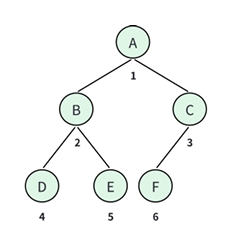
BFS
代码实现
#include <iostream>
#include <queue>

using namespace std;

const int N = 1e5 + 10;
int child_left[N], child_right[N];

void addChild(const int& root, const int& left_child, const int& right_child) {
    child_left[root] = left_child;
    child_right[root] = right_child;
}

void bfs(const int& root) {
    queue<int> q;

    // 进入循环
    q.push(root);
    while (!q.empty()) {
        cout << q.front() << " ";
        if (child_left[q.front()]) {
            q.push(child_left[q.front()]);
        }
        if (child_right[q.front()]) {
            q.push(child_right[q.front()]);
        }
        q.pop();
    }
    cout << endl;
}

int main() {
    int n = 0;
    cin >> n;
    for (int i = 1; i <= n; ++i) {
        int l = 0, f = 0;
        cin >> l >> f;
        addChild(i, l, f);
    }

    bfs(1);

    return 0;
}